





 Time:2026-01-05
 Source:
In the evolving world of waste management, efficiency and accuracy are paramount. Traditional methods often struggle with the volume and complexity of modern waste streams. Enter the AI sorting robot—a game-changing piece of garbage sorting machine technology that is redefining what's possible at a municipal solid waste sorting facility. By leveraging artificial intelligence, these robots are not just automating tasks; they are bringing unprecedented precision, speed, and intelligence to the heart of the waste sorting line, turning recycling goals into tangible results.
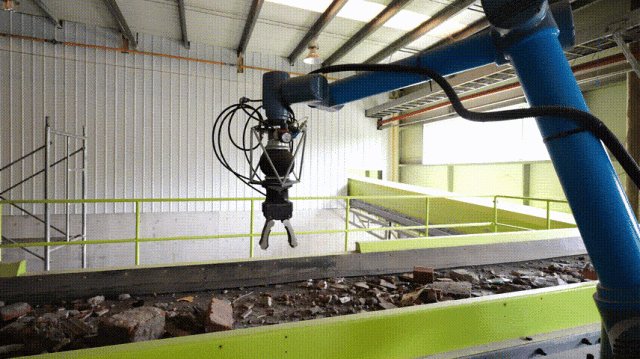
What Is an AI Sorting Robot?
An AI sorting robot is an advanced, automated device that utilizes artificial intelligence, primarily through sophisticated visual recognition systems, to identify, classify, and physically sort different types of materials. In the context of waste sorting, it acts as a highly skilled and tireless worker that can accurately recognize over 30 different categories of recyclables—from various plastics and metals to paper and cardboard—and sort them at remarkable speeds.
The Role of AI Robots in MSW Sorting
The challenge of municipal solid waste (MSW) is its heterogeneous nature. An automatic waste sorting machine like the AI robot excels in this environment by performing fine sorting and quality control after initial bulk separation. Equipped with industry-leading vision systems and a precise actuation control system, it can sort up to eight different material categories simultaneously at a blistering rate of 5,400 picks per hour.

Key Advantages of Implementing AI Sorting Robots
Integrating this technology into your waste sorting line delivers measurable benefits:
Fast Sorting Speed: Achieves a maximum throughput of 5 tons per hour by performing up to 5,400 sorting actions hourly across multiple material streams.
High Recognition Accuracy: Boasts a true identification rate of ≥95% for general MSW and an impressive ≥99% for mixed plastic bottles, ensuring high-purity output.
Wide Applicability: Features flexible end-effectors (suction cups or clamps) that can be switched based on the incoming materials, making it adaptable to various waste streams.
Autonomous Operation: Employs cloud-based intelligence for seamless updates, instant fault response, remote operation, and predictive maintenance, maximizing uptime.
Technical Core: The Foundation of Exceptional Performance
The design of this AI sorting robot is centered on reliability and high efficiency. Its core robotic arm has a working radius of 1.6 meters, allowing flexible picking across wide sorting trays. The robot's main structure is compact, with dimensions of 3.4 meters in length, 2.2 meters in width, and 2.2 meters in height, making it easy to integrate into existing sorting lines, and it weighs approximately 1 ton. It is equipped with interchangeable suction cups or clamps that can adaptively handle different materials, from lightweight films to objects weighing 1-3 kilograms. In terms of energy consumption, its operating power is about 7 kilowatts, achieving a high sorting speed of up to 5,400 picks per hour while maintaining excellent energy efficiency. All these design elements work together to support its stable ≥95% sorting accuracy, ensuring high-purity final output.
Case Studies: Proven Results in the Field
The real-world impact of AI robotics is clear. In the Guangdong Dongguan Industrial Solid Waste Project, the installation led to a 40% lower investment cost and a 40% faster payback cycle, while increasing overall recycling benefits by 10%. Similarly, the Shaanxi Yulin Municipal Solid Waste Sorting Project saw a 40% reduction in investment cost, a 30% faster payback cycle, and a 15% boost in recycling revenue.
Conclusion
The integration of AI sorting robots is no longer a futuristic concept but a present-day imperative for efficient waste management. As a core component of the modern automatic waste sorting machine lineup, they directly address the critical needs for higher purity, greater throughput, and better economics in recycling operations. By transforming the waste sorting process from a manual, costly challenge into an intelligent, data-driven system, AI robotics is powering the transition towards a more sustainable and circular economy. Investing in this technology is an investment in the future of recycling. Contact us to get more details.
 Prev
Prev