





 Time:2026-06-26
 Source:
Today, AI-driven sorting centers are transforming the industry. They don't just sort waste—they turn it into profit. But building a truly profitable green sorting center requires more than just buying a few machines. It comes down to three critical factors: smart planning, intelligent equipment, and strong partnerships.
Why AI Sorting Centers Are the Future of Waste Management
The waste industry is evolving rapidly. With stricter environmental regulations and growing demand for recycled materials, sorting centers must move beyond manual methods. AI waste sorting systems bring unmatched precision, speed, and scalability. They can identify and separate materials faster than any human worker, 24/7, with consistent accuracy. This means higher purity, higher resale value, and lower operating costs. As a result, AI-powered sorting centers are becoming the backbone of profitable waste recycling operations.
Smart Planning Builds a Solid Foundation
The first step to long-term profitability is smart planning. A well-designed sorting center starts with the right location—one that ensures compliance, appropriate capacity, lower transportation costs, and a broader service area. The layout must match the scale of incoming materials and the available investment. With proper planning, a green sorting center can minimize operating costs and maximize efficiency from day one. This phase is often overlooked, but it determines the entire project's success.
AI Equipment Unlocks Revenue
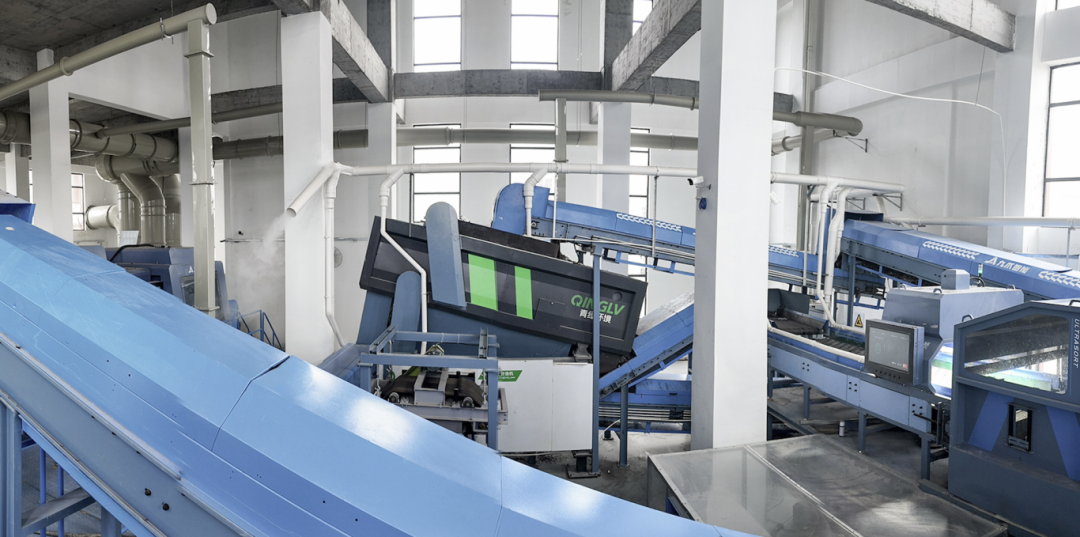
The second—and most critical—factor is equipment selection. The era of labor-intensive sorting is over. Modern sorting centers rely on automated, intelligent systems that can sort a wide range of recyclables with high precision. Qinglv's AI Sorting Robot and AI Optical Sorter are examples of how AI enhances productivity. The AI Sorting Robot performs up to 5,400 picks per hour, sorting 8 material categories at once, with over 95% accuracy. Meanwhile, the AI Optical Sorter identifies more than 30 types of recyclables at speeds of up to 5 m/s, handling 10 tons per hour. These systems drastically reduce labor costs while improving sorting purity and throughput. Other key equipment—such as the 3D Sorter, Magnetic Separator, Eddy Current Separator, Shredder, Disc Screen, and RDF Pellet Machine—work together to maximize recovery and revenue.
Partnership Reduces Risk and Improves Profitability
The third factor is choosing the right partner. A reliable partner provides not only proven technology but also operational expertise, stable recycling channels, and sales networks. This reduces trial-and-error costs and lowers business risks. With the right support, a sorting center can achieve long-term stability and consistent profits.
Conclusion: Seize the Trillion-Yuan Opportunity
The market for waste resource recovery is vast—worth trillions. Sorting centers that adopt AI technology are already gaining a competitive edge. By combining smart planning, intelligent equipment, and strong partnerships, you can turn waste into a sustainable, high-margin business. Those who act now will be the ones to lead the next wave of the circular economy.
 Prev
Prev