





 Time:2026-10-13
 Source:
Over the past few years, the most obvious change in the environmental protection industry is not that demand has disappeared, but that the way to make money has changed.
In the past, policy support, project construction, and capital investment formed the main logic of industry growth. With more projects and larger scale, companies could continue to grow. But in recent years, this model has come under obvious pressure. From 2021 to 2025, the total revenue of 144 A-share listed environmental companies grew by a cumulative 5.9%, while total net profit fell by a cumulative 34.4%. "Revenue growth without profit growth" has become a relatively common phenomenon in the industry.
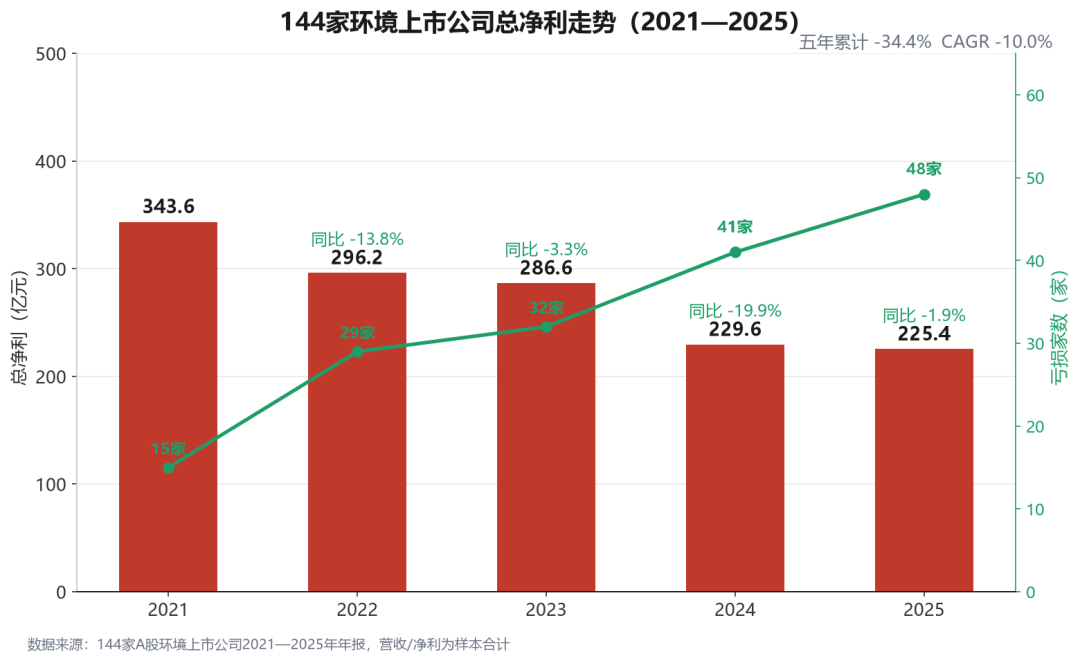
At the same time, market focus is also changing. In the past, people looked at contract value and project scale. Now, increasing attention is being paid to operational efficiency, costs, payment collection, and asset utilization after a project is built. Entering the 15th Five-Year Plan period, environmental demand still exists, but the way companies achieve growth is shifting from "capturing incremental volume" to "improving efficiency, doing operations, and unlocking value."
From Project Construction to Continuous Operation
First, as the growth of new large-scale projects slows, project completion is only the beginning. Whether it can operate stably truly determines value. Equipment efficiency, operating costs, payment cycles, and asset utilization all directly affect project returns.

Competition in the environmental protection industry is therefore gradually shifting from "who builds more" to "who operates projects better." Equipment upgrades, process optimization, and professional operations will become important directions in the existing asset market.
From Standard Projects to Specialized Scenarios
Second, industrial customers have more direct requirements for environmental projects: they need stable compliance, cost control, and attention to resource recovery and return on investment.
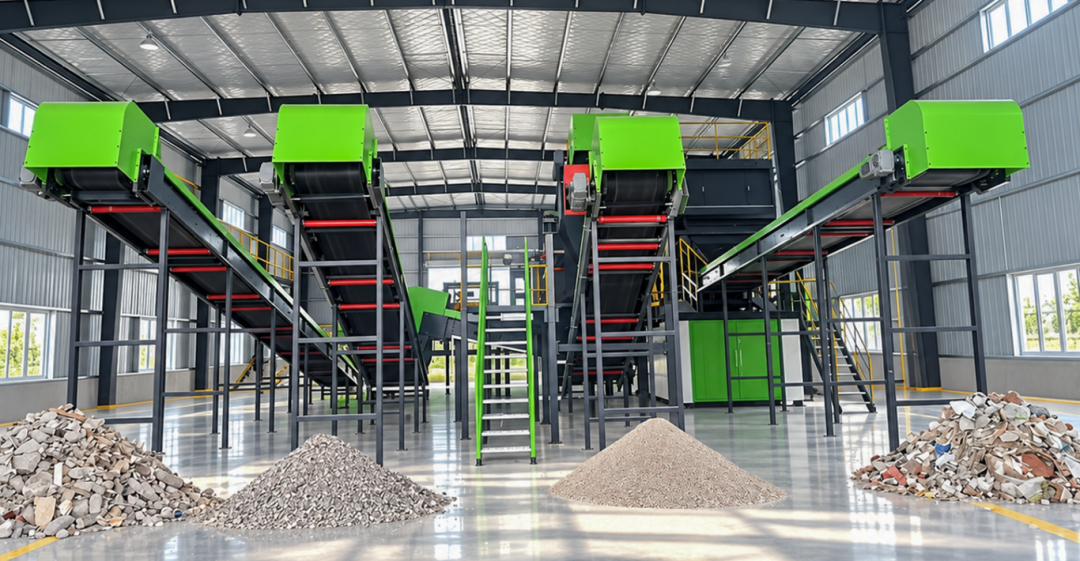
This means the environmental market is no longer just about large standardized projects. Some projects that are small in scale but have complex working conditions and high technical requirements actually test a company's process and technical capabilities more. The threshold for market competition is also shifting further from project acquisition capability to the ability to solve specific problems.
From Waste Treatment to Resource Management
Third, the key to resource recovery is to use pre-treatment, screening, and intelligent sorting to separate different materials that are mixed together as much as possible, so that waste that originally required spending money to treat can re-enter the utilization chain.
Taking Qinglv Environment as an example, it has developed corresponding solutions for different solid waste scenarios: for municipal solid waste, the focus is on improving sorting efficiency; for construction and demolition waste, it strengthens the classification and recovery of multiple materials; for aged waste, it conducts targeted sorting for characteristics such as high soil content and high mixing, promoting the classified utilization of soil, plastics, metals, and lightweight materials.
What solid waste resource recovery truly needs to solve is no longer just "how to treat it," but "how much value can be created after treatment."
From Incremental Construction to Stock Efficiency Improvement
Fourth, part of the future growth in the environmental protection industry may not come from new projects, but from the upgrading and efficiency improvement of existing facilities.
Equipment renewal, process transformation, asset revitalization, and operation trusteeship will all create new market demand. At the same time, the functions undertaken by environmental facilities may also extend from single disposal to resource recovery, energy utilization, and production of recycled products.
As new projects slow down, how to make already-built assets deliver greater value will become an important issue for the next stage.
From Technology Display to Production Application
Fifth, after AI enters the environmental protection industry, what truly matters is not "using AI," but whether it can solve real problems in production.
In solid waste sorting scenarios, Qinglv Environment has already applied AI to target recognition and automatic sorting, and formed synergy with front-end screening equipment. Ultimately, the value of AI must still land on recognition efficiency, sorting purity, labor costs, and production stability.
Technology itself is not the goal. Efficiency and profitability are.
Standing at the starting point of the 15th Five-Year Plan, the environmental protection industry is switching to a new set of competitive logic. In the past, competition was about projects and scale. In the future, more weight will be placed on operational efficiency, resource recovery, asset efficiency improvement, and the ability to continuously generate cash flow.
For Qinglv Environment, solid waste sorting is the technology entry point, but the greater value lies in gradually connecting equipment, processes, complete line delivery, operational support, and resource sales, so that waste that originally required spending money to treat can become usable and tradable resources after sorting.
Growth in the environmental protection industry has not disappeared; it has only shifted from "expanding scale" to "creating higher value." In the future, what is being competed for is not just projects and equipment, but who can truly convert the assets, technology, and resources in their hands into sustained operating value.
 Prev
Prev