





 Time:2026-10-23
 Source:
The 8-Trillion-Yuan Opportunity Buried in Waste: Who Will Tap It?
According to public industry reference data, one ton of recycled aluminum can reduce production and processing costs by about RMB 13,600 and carbon dioxide emissions by about 11 tons compared with primary aluminum. One ton of recycled copper can save about RMB 3,000 in production and processing costs and reduce carbon dioxide emissions by about 2 tons. These two figures reveal the simplest value of the circular economy: turning used waste back into raw materials saves minerals and reduces carbon emissions.
Policy Guidance Sets Clear Circular Economy Goals
Today, this “account” has been written into national planning. The 15th Five-Year Plan for Circular Economy Development, issued in July this year, proposes that by 2030, the output value of the resource recycling industry should reach RMB 8 trillion, an increase of about 60% from RMB 5 trillion at the end of the 14th Five-Year Plan period. During the same period, major resource productivity should increase by about 16% compared with 2025, the annual comprehensive utilization volume of bulk solid waste should reach about 4.5 billion tons, and the annual recycling volume of major renewable resources should reach 510 million tons.
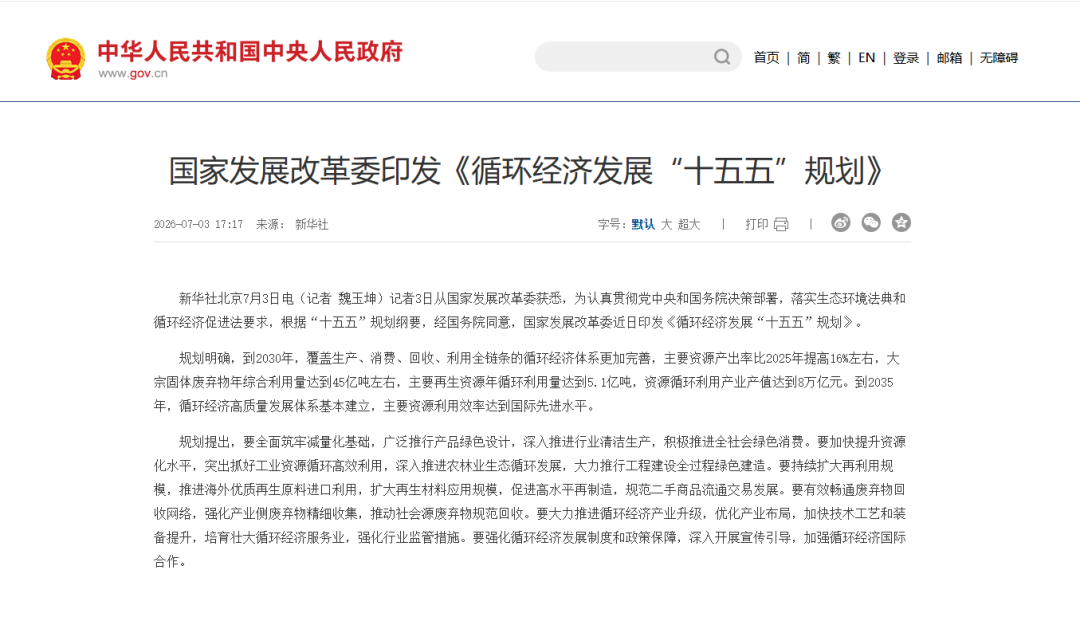
Behind these targets is continued institutional strengthening. In the second half of 2025, the Standing Committee of the National People’s Congress conducted a law enforcement inspection on the Circular Economy Promotion Law, covering 12 provinces and municipalities. In May 2026, the State Council further made clear that the law should be revised at an accelerated pace, with the standards system and incentive and constraint mechanisms improved. The circular economy is moving from “advocacy and encouragement” toward “rigid constraints.”
Technology Empowers the Solid Waste Resource Recovery Chain
For the circular economy to truly take hold, the key lies in unblocking the technological chain for waste resource recovery. In mixed municipal solid waste, plastics, metals, textiles, films, and other materials are often mixed together, and traditional manual sorting struggles to balance efficiency and recovery quality. Construction and demolition waste presents problems such as large differences in particle size and mixed light and heavy materials. Aged waste also faces challenges such as high soil content, material adhesion, and difficulty in resource identification. Without effective fine sorting, valuable components may be disposed of inefficiently and difficult to convert into sellable recycled resources.
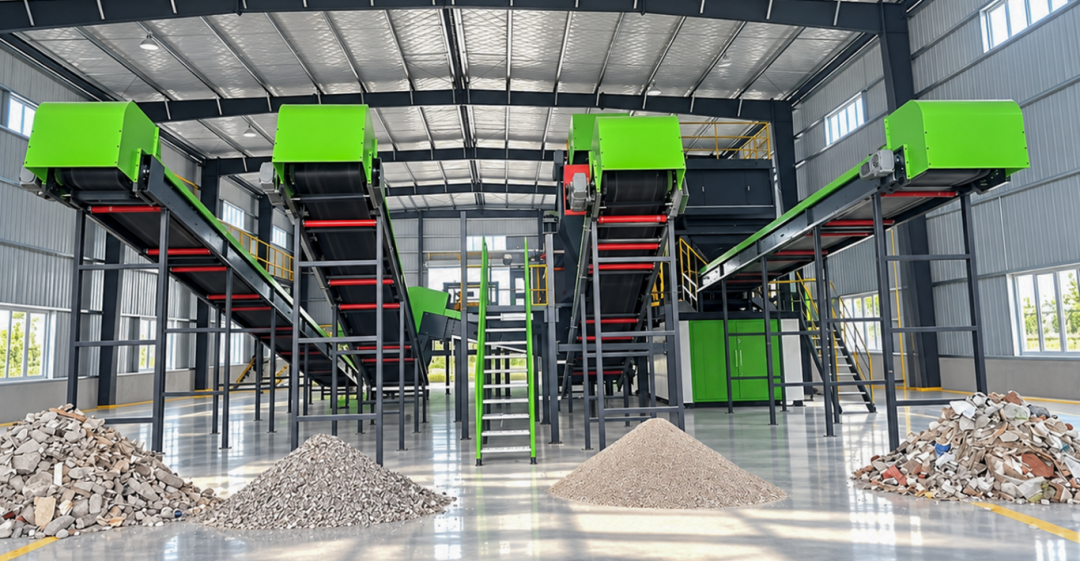
This is precisely why Qinglv Environment has continued to deepen its work in intelligent solid waste sorting. Relying on self-developed sorting equipment and integrating pre-treatment, fine screening, 3D sorting, and AI intelligent sorting technologies, Qinglv Environment provides systematic solutions tailored to different solid waste characteristics, helping projects improve the separation efficiency of recyclables and product purity while reducing end-of-pipe disposal pressure. At the same time, it can provide full-chain services covering project planning, complete production line delivery, investment cooperation, and operation trusteeship, driving resource recovery projects from “completion and commissioning” toward stable operation.
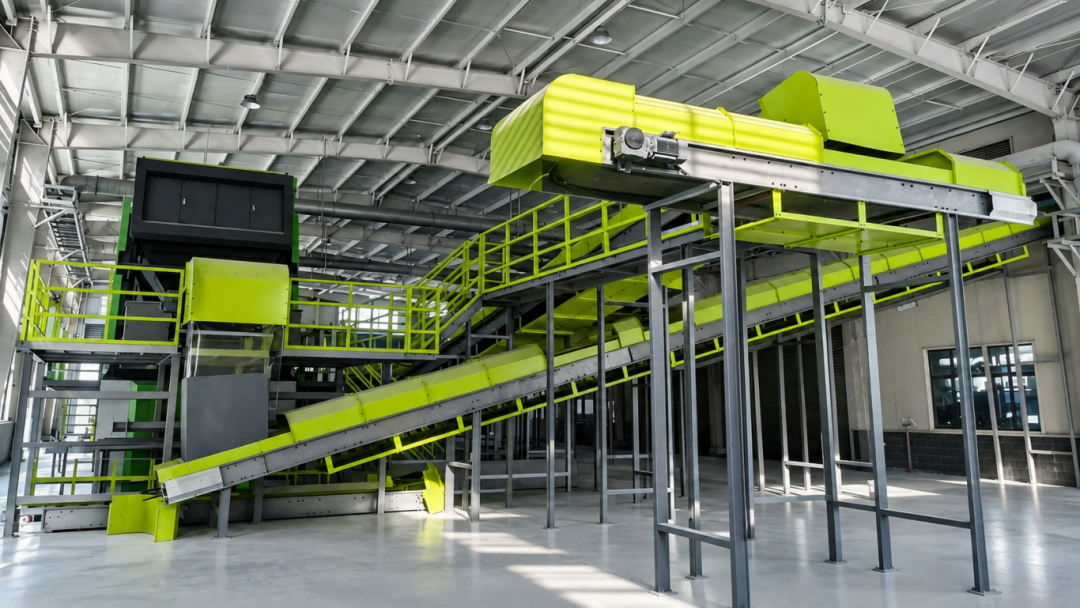
Take Qinglv Environment’s Guangdong mixed low-value municipal solid waste sorting project as an example. The project has a processing capacity of several hundred tons per day, mainly sorting plastics, metals, textiles, cans, wood, films, and other materials. Such practices show that the value of solid waste treatment lies not only in reducing waste volume, but also in unlocking the economic value of recycled resources through technological means.

Industrial Synergy Unlocks the Value of Resource Circulation
Looking ahead, the circular economy is not only an important path for safeguarding resource security and promoting green, low-carbon transformation, but also a practical choice for cultivating new industrial growth points. When policy goals, intelligent equipment, and market-oriented operations work together, waste can be transformed from a burden of environmental governance into the starting point of resource circulation.
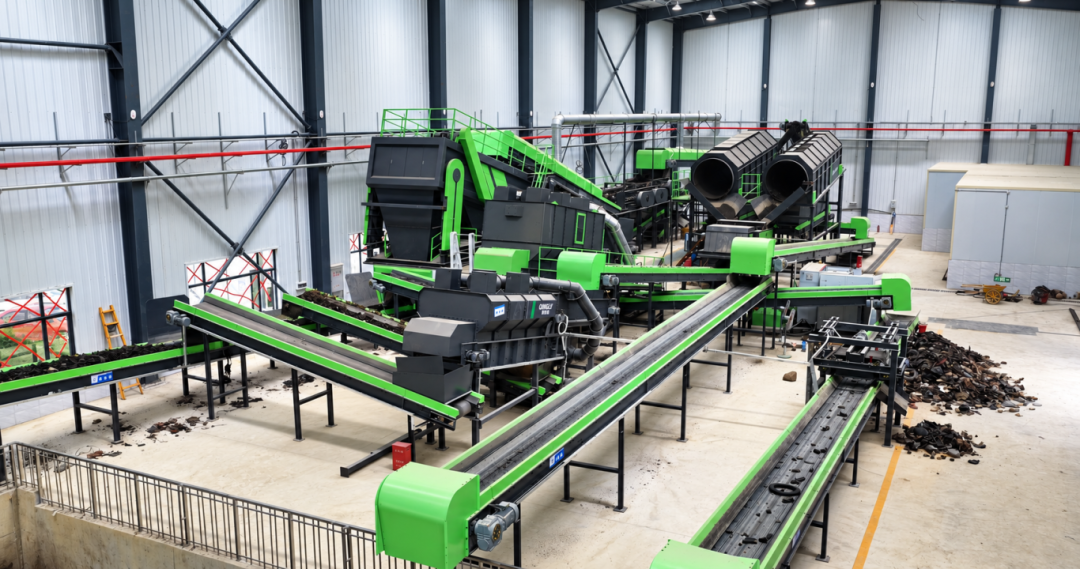
Let resources circulate and value continue to grow. Qinglv Environment will continue to rely on intelligent sorting technology and systematic services to support solid waste resource recovery and contribute to the development of the circular economy and the long-term vitality of the industrial ecosystem.
 Prev
